

Cats are experts at hiding stress, so the signs tend to be quiet ones you have to know to look for. Hiding more than usual, overgrooming to the point of bald patches, missing the litter box, vomiting, eating less, or suddenly swatting when touched can all point to a cat who is anxious rather than simply moody. This matters because ongoing stress does not stay in the mind. It wears on the immune system, digestion, and skin over time, and many of the same signs can also mean an underlying medical problem, which is why they are worth taking seriously rather than waiting out.
At Cobb & Co. Veterinary Clinic in Elgin, we handle cats with the quiet, low-stress approach that makes it easier to spot when something is off, and several of our team are Certified Cat Friendly and Fear Free Professionals who understand how differently cats show worry. When a change in behavior turns out to be stress rather than illness, our behavioral counseling helps you get to the root of it and build a calmer routine at home. If your cat seems anxious or is acting unlike themselves, request a visit with us so we can sort out what is really going on.
Quick Facts
- A cat’s emotional wellness matters as much as physical health, and stress that goes unaddressed can gradually wear on the immune system, digestion, and skin.
- Because cats hide discomfort so well, many anxious-looking behaviors turn out to have a medical cause, which is why a veterinary exam comes before labeling anything anxiety.
- The most reliable stress signals are subtle: hiding, overgrooming, litter box changes, vomiting or diarrhea, appetite shifts, and sudden swatting, not dramatic outbursts.
- Most stressed cats improve with a mix of environmental support, predictable routines, patient training, and, when needed, medical help, and this is very manageable once you know where to start.
Is My Cat’s Anxiety a Medical Problem or a Behavior Problem?
Often it is both. Anxiety in cats is rarely just “in their head”; it is a mix of emotional, behavioral, and physical responses, and just as often a physical illness is what makes a cat act anxious in the first place. Sorting out which one you are dealing with is step one.
The overlap runs deep, because so many medical problems wear an anxiety costume. A cat who suddenly hides, swats, or stops jumping onto the counter may be showing pain signs rather than a personality shift, which is why physical causes come first before any behavior is labeled anxiety. Older cats add another layer: restlessness at night, staring at walls, or forgetting familiar routines can point to cognitive decline in senior pets, which is easy to mistake for stubbornness or ordinary aging. Thyroid disease, high blood pressure, and fading vision or hearing can all quietly rewire how a cat reacts to the world too.
So a good exam earns its keep. When we look at a stressed cat, we weigh the physical and the behavioral together, and often the first move is to rule out an underlying illness so the plan targets the real problem instead of chasing a symptom.
What Do the Signs of a Stressed Cat Actually Look Like?
A stressed cat rarely announces it. Instead of dramatic outbursts, you get a scatter of small shifts away from normal, and reading them early is what keeps a nervous cat from tipping into a chronically anxious one.
Which behaviors mean my cat is stressed?
Watch for shifts in the everyday more than single events.
- Changes in the basics: eating less, avoiding areas of the home, sleeping in new hiding spots, or a sudden change in litter box habits often show up before anything obvious.
- Social withdrawal or clinginess: a cat who vanishes under the bed, or one who suddenly cannot leave your side, can both be telling you the same thing.
- Overgrooming: licking one area until it thins or goes bald is a classic self-soothing behavior that can also break the skin.
- New irritability: swatting, growling, or hiding when touched is not spite, it is a cat who has run out of quieter ways to say they are overwhelmed.
Because these signs are easy to trigger further, our team leans on low-stress handling during exams, moving slowly and letting the cat set the pace so we read the real behavior instead of pure exam-room fear.
How do I read my cat’s body language?
Cats say a great deal before they ever swat, and catching those early signals lets you give space before things escalate. Flattened ears, a tucked or twitching tail, dilated pupils, and a low crouch are all early cat body language that a cat is uneasy and needs room. A growl is not defiance either; it is honest communication, and punishing it only teaches a cat to skip the warning next time, which is far more dangerous.
What Triggers Stress and Anxiety in Cats?
Most feline stress traces back to a threat to a cat’s sense of security, whether that is a loud noise, a new person or pet, a schedule change, a hidden medical problem, or simply a life so predictable it becomes boring. Cats are creatures of habit and territory, so changes we barely notice can register as a genuine disruption.
New furniture, a moved litter box, or an unfamiliar scent are common feline life stressors, and cats cope best when they have hiding places and vertical perches that let them watch the room from a safe height. The table below sorts the usual culprits.
| Trigger Type | What It Looks Like at Home | What Tends to Help |
|---|---|---|
| Loud noises | Hiding, shaking, bolting during storms or fireworks | Safe retreats, calming aids, closed rooms |
| Household change | New pet, baby, renovation, visitors, moved furniture | Slow introductions, keeping key resources stable |
| Schedule and alone time | Distress when routines shift or you are away longer | Predictable feeding and play, enrichment while out |
| Boredom | Same room, same day, no challenge, pent-up energy | Puzzle feeders, play sessions, climbing space |
| Medical | New anxiety with no obvious trigger | A veterinary exam to rule out illness |
Can loud noises make my cat anxious?
Yes, and noise fear is one of the more visible forms of feline stress. Thunderstorms, fireworks, construction, and even a slamming door can set off noise aversion in a cat, and that fear often intensifies with age or when an illness lowers their tolerance. Give a noise-sensitive cat a quiet, enclosed retreat with familiar bedding and some background sound to soften the peaks. If the fear is new or severe, our same-day urgent care during our regular hours can check whether pain or another medical change is turning up the volume.
How do household changes and other pets stress my cat?
Cats read the household like a map, so a new animal, a renovation, weekend visitors, or a shifted routine can quietly rattle even a confident cat. A change in your work schedule can leave a bonded cat with real distress when left alone, showing up as excessive meowing, pacing near the door, or scratching while you are gone. In multi-cat homes, tension between cats is often silent, which is why every cat needs its own food, water, and litter box in separate spots. If the household has changed, we can help you set up introductions and adjustments that give each cat room to feel secure again.
Can boredom cause stress in cats?
It can, and it is one of the most overlooked causes. A bright, active indoor cat with nothing to do all day builds up energy and frustration that has to go somewhere, and it often surfaces as destructive scratching, yowling at 3 a.m., or compulsive overgrooming. When these behaviors appear suddenly, our in-house lab work helps rule out a physical problem masquerading as boredom before it slips by.
How Can I Help My Anxious Cat Feel Calmer?
Helping an anxious cat usually comes down to three levers working together: patient, reward-based training, a richer and more predictable environment, and veterinary support when the situation calls for it. No single fix works for every cat, and the goal is a calmer baseline, not overnight perfection.
How does positive training help an anxious cat?
Reward-based training builds calm confidence by letting a cat choose brave behavior and then paying them for it. Rewarding calm choices with treats or play builds confidence through positive reinforcement, while scolding or spraying only teaches a cat to fear you and hide the stress instead. Punishment does not lower anxiety; it drives it underground, where it is harder to spot and harder to help.
Handling is where this pays off most. Teaching a cat to accept nail trims, ear checks, and carrier time on their own terms through cooperative care turns handling from a battle into a routine the cat can predict and tolerate.
What kind of enrichment calms a stressed cat?
Enrichment gives nervous or bored energy a productive outlet, which is often the difference between a restless cat and a settled one. Puzzle feeders, wand toys, and rotating enrichment toys give a cat’s hunting instinct somewhere to go, easing the boredom that so often turns into anxious pacing or overgrooming. A few short hunting-style play sessions a day beat one long one.
How should I set up my home for an anxious cat?
A cat feels calmest when the essentials are plentiful, spread out, and always within reach, so no resource is worth guarding and no trip to the litter box or food bowl means passing something scary. Enough litter boxes, separated food and water, high perches, and quiet hiding spots give your cat options and an exit at every turn.
A few setup basics go a long way for a nervous cat:
- Litter boxes: Follow the one-per-cat-plus-one rule, so two cats means three boxes, placed in separate, quiet spots rather than lined up in a row, since a cat who feels cornered at the box often starts avoiding it.
- Vertical space: Cat trees, wall shelves, and window perches let a cat climb, survey the room from a safe height, and retreat upward when the world feels like too much. To a cat, height is security.
- Separated food and water: Offer food and water in more than one spot, with water set away from both food and litter, so a shy cat never has to eat shoulder to shoulder with a bolder housemate.
- Hiding spots: A covered bed, a box on its side, or a quiet closet shelf gives an overwhelmed cat somewhere to decompress. Hiding is healthy coping, so always leave a retreat available rather than coaxing your cat out.
Predictability ties it together. Keeping these resources in consistent places, and feeding and play on a steady rhythm, quietly tells an anxious cat the world is safe enough to relax in. If your cat is still struggling despite a calm, well-stocked home, we can help you fine-tune the layout and check for any medical piece feeding the stress.
Can Stress Actually Make My Cat Sick?
Yes, and this is the part that surprises many families: ongoing stress does not just make a cat unhappy, it can trigger or worsen real physical illness. A cat’s mind and body are closely linked, so chronic anxiety often surfaces as a medical problem long before anyone connects it back to stress.
| Condition | How Stress Plays a Role | Signs to Watch For |
|---|---|---|
| Upper respiratory infections | Stress suppresses the immune system and can reactivate dormant feline herpesvirus, a virus many cats carry silently for life | Sneezing, watery or goopy eyes, nasal discharge, congestion, or squinting, often flaring after a move, a boarding stay, or a new arrival |
| Stress cystitis (feline idiopathic cystitis) | One of the most common stress-driven conditions in cats, where anxiety inflames the bladder wall even with no infection present | Straining in the box, frequent tiny urinations, blood in the urine, or peeing outside the box; in male cats it can progress to a life-threatening urinary blockage |
| Vomiting and diarrhea | The gut and brain are closely wired together, so stress can unsettle digestion and throw off the balance of the GI tract | Intermittent vomiting, soft stool or diarrhea, or a cat who stops eating when the routine changes |
| Overgrooming and hair loss | Anxious cats often groom to soothe themselves, and overgrooming wears the coat away, sometimes called psychogenic alopecia | Thinning fur or bald patches, commonly on the belly, inner thighs, or flanks, with the skin underneath usually looking normal |
Because any of these can also have a straightforward medical cause, it is always worth having us check rather than assuming it is just nerves, and a male cat straining to urinate with little coming out is an emergency that needs to be seen right away.
How Does a Vet Help With a Stressed Cat?
Veterinary partnership does two jobs at once: it rules out the medical problems that mimic anxiety, and it opens up treatment options you cannot safely reach on your own. Because a stressed cat cannot tell us what hurts, a thorough workup is often what turns guesswork into a real plan.
What tests help find the cause of my cat’s stress?
A full physical exam paired with bloodwork does most of the heavy lifting, ruling out pain, thyroid disease, kidney changes, and other systemic causes so the plan targets true anxiety instead of a hidden illness. Our in-house digital x-ray and ultrasound let us look for physical causes during the visit rather than making you wait days for results. Truly complex cases may involve looping in a veterinary behavior specialist, and we will tell you honestly when that is the right call.
What medical and nutritional options can calm my cat?
Sometimes training and enrichment are not enough on their own, and that is where medicine helps. Options range from calming aids to prescription support, matched to the individual cat.
- Pheromones: diffusers and sprays that release calming pheromones copy the natural scent signals cats use to mark a space as safe, and they often pair well with training or a calming diet.
- Supplements and calming diets: certain diets and chews are formulated to take the edge off, and we can weave them into a broader nutritional counseling plan.
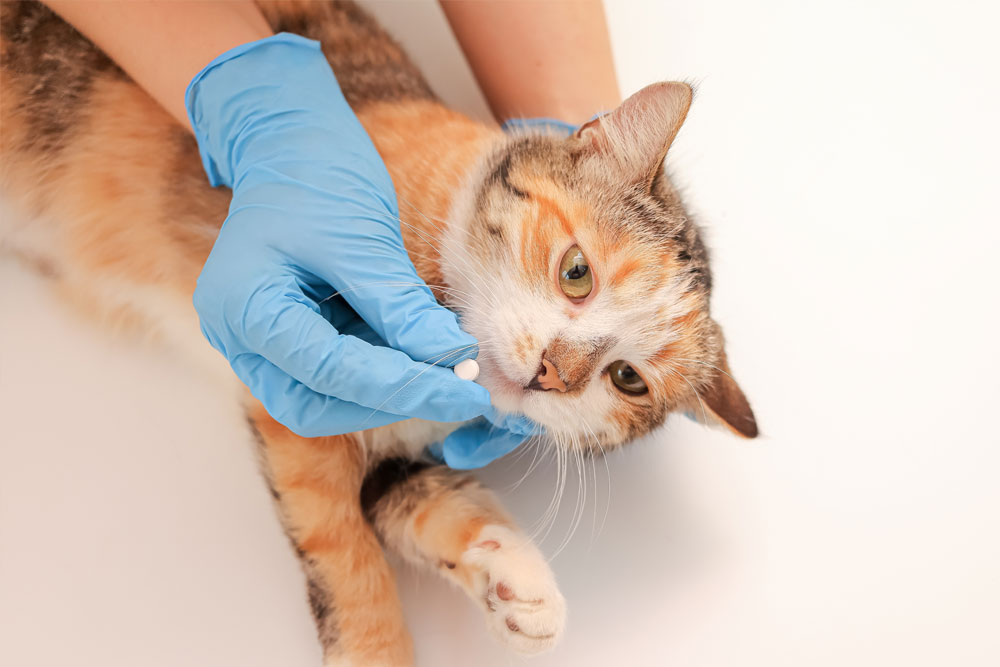
- Prescription medication: some cats need short-term medication to let training take hold, while others benefit from longer-term support, and many safe, evidence-based choices exist.
Before recommending any of these, we evaluate each cat’s overall health so the option we choose is safe for that specific patient.
Frequently Asked Questions About Stress and Anxiety in Cats
Is it normal for a cat to hide sometimes?
Yes, a little hiding is completely normal, especially in a new environment or after a startling event, since cats use quiet, enclosed spots to reset. The concern is a change in pattern, when hiding becomes the new default: a social cat who disappears for long stretches, avoids people they used to greet, or pairs the hiding with eating less or skipping the litter box. When you see that shift, it is worth having your cat checked so we can separate normal cat behavior from stress or illness.
Will my cat need medication for anxiety forever?
Not usually. Many cats need medication only short-term, as a bridge that lowers anxiety enough for training and environmental changes to work, and then it is tapered off. Others with deeper or lifelong anxiety do better with ongoing support, much like people managing a chronic condition. There is no one-size answer, so we reassess regularly, always aiming for the lowest level of intervention that keeps your cat comfortable and confident.
Helping Your Anxious Cat Find Calm Again
Recognizing that your cat is stressed is genuinely the hardest part, because the signs are so quiet. From here, patient training, a richer and more predictable home, and a veterinary partner to rule out medical causes can help even a deeply anxious cat find steadier ground, often more than families expect once the right pieces are in place.
If your cat has been acting unlike themselves, reach out to schedule a wellness or behavioral consultation at Cobb & Co. Veterinary Clinic in Elgin, and we will help you build a calmer life for your cat.