
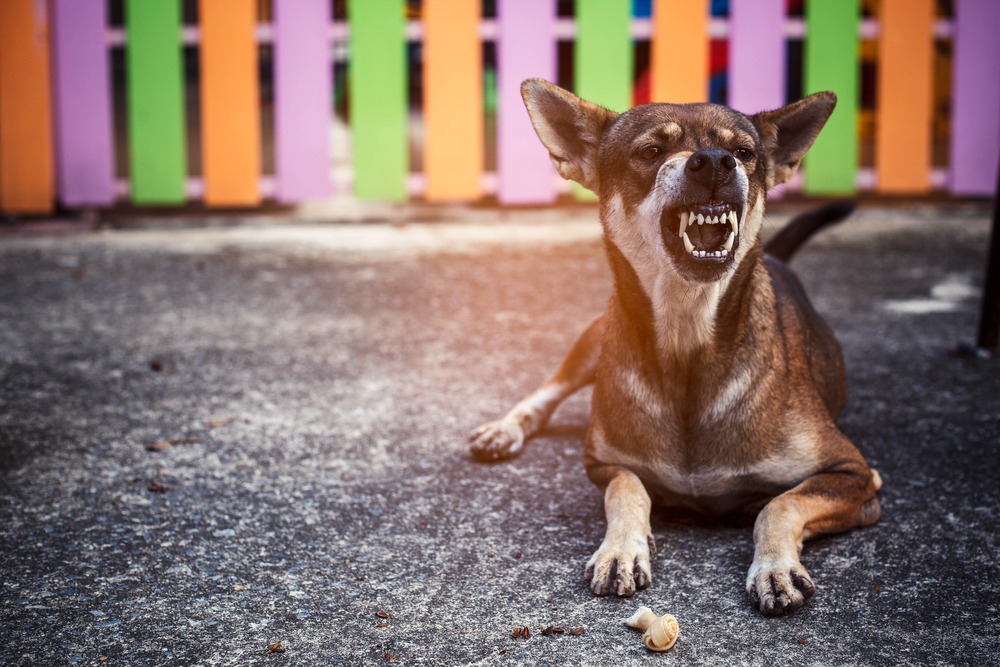
If your dog growls over their food bowl, stiffens when you reach for a toy, or snaps when another pet gets too close to their favorite spot, they’re doing something that makes perfect evolutionary sense, even if it’s completely unacceptable in a household setting. Resource guarding is one of the most common behavior issues in dogs, and one of the most misunderstood. Punishing it often makes it worse. Ignoring it can allow it to escalate. What works is understanding the emotional state behind the behavior and addressing it in ways that change how the dog feels about the approach rather than just suppress the visible response.
Cobb & Co. Veterinary Clinic in Elgin takes a client-empowering approach to behavioral health, and we believe that an informed family is the most effective tool in any behavior modification program. Our behavioral counseling services help you work through guarding and other behavior concerns with professional support. Book an appointment to talk through what you’re observing.
What Is Resource Guarding and Why Does It Happen?
Resource guarding is a defensive behavior where dogs protect something they value by warning off perceived threats. The “resource” can be food, treats, toys, bones, sleeping spots, attention from a particular person, or even territory. The behaviors can range from a brief stiffening of the body to outright biting.
What’s important to understand is that resource guarding is anxiety-based, not aggression-based in the way most people think of aggression. The guarding dog isn’t trying to be dominant or cruel. They’re trying to keep something they care about, and they’ve learned (often correctly, from their perspective) that warning behaviors prevent loss. From the dog’s emotional standpoint, the resource is genuinely at risk. The growl is a request to stop the threat, not an attack.
That distinction shapes how we approach it. Suppressing the warning (punishing the growl) doesn’t reduce the underlying anxiety. It just removes the early warning system, which makes everything more dangerous. The path forward is changing how the dog feels about approaches, so the warning isn’t needed in the first place.
How Do You Recognize the Signs of Resource Guarding?
Resource guarding shows up on a spectrum. Subtle early signals often appear long before more dramatic ones, and noticing them early gives you the best chance to address the behavior before it escalates. This escalation is known as the “stress ladder“.
Early, subtle signs:
- Stiffening of the body when someone approaches a valued item
- Eating faster when someone walks past during a meal
- A “hard” stare in the direction of the approaching person or animal
- Whale eye (showing the whites of the eyes while turning the head slightly)
- Hovering over a toy or food in a tense posture
- Lifting the lip without growling
More overt signs:
- Growling when approached
- Snarling, showing teeth
- Snapping (an air bite intended as a warning)
- Lunging or biting
While food guarding and toy guarding are the most common types, this behavior can occur over anything your dog sees as valuable to them. Your dog is genuinely communicating discomfort, not “acting out.” Knowing how to read fear and stress signals helps you intervene at the early stages rather than waiting for an escalated- and potentially dangerous- response.
Why Do Dogs Develop Resource Guarding?
Several factors contribute to whether your dog develops guarding behavior. Two big ones are instinct combined with learning history, and environmental conditions in the household.
Instinct, Genetics, and Learning History
Guarding has evolutionary roots. In any wild canid social group, an animal who couldn’t defend access to food was at a real survival disadvantage. The behavior is built in to some degree, even in pets generations removed from those pressures. Any dog can guard under the right conditions, regardless of breed.
Early life experiences shape it significantly. Puppies in litters with limited food often learn that being aggressive at mealtime gets them more, and the lesson sticks. Rescues with histories of food scarcity or competition often guard heavily even after they’ve been in stable homes for years. Their nervous system learned that resources weren’t reliable, and that learning takes time to undo.
Reinforcement history maintains the behavior over time. If your dog growls and the approaching dog backs off, your dog has learned that growling works. Even when the original anxiety has eased, the behavior persists because it’s been reinforced.
Environmental Triggers That Increase Guarding
Some household conditions amplify guarding regardless of the individual dog’s history:
- Competition with other pets for food, toys, attention, or resting spots
- Inconsistent feeding routines where food access feels unpredictable
- Limited space where dogs can’t move away from threats
- Major life changes like a new family member, a move, or a recent illness
- Reaching for items as the only way to remove them, which teaches the dog that approaches mean loss
The good news is that many of these are modifiable. Creating predictable routines, providing safe spaces, and changing how items are removed (using trade rather than take) all reduce the conditions that fuel guarding.
Resource Guarding in Specific Household Situations
Three contexts deserve specific attention because the consequences of guarding can be more serious in them.
Resource Guarding in Homes With Children
Children are at higher risk during guarding episodes for a few reasons. They’re at face level when they approach your dog while eating or chewing. They sometimes don’t recognize the early warning signs that an adult would catch. They may move quickly or unpredictably in ways that intensify your dog’s reaction.
If your dog guards anything and you have children in the home, supervision becomes non-negotiable. Raising kids with pets safely involves several key practices:
- Feed the dog in a separate, gated area away from kid traffic
- Pick up high-value chews when children are around
- Teach children to leave the dog completely alone while eating, chewing, or resting in their bed
- Never let children take items from the dog, even toys
- Use a baby gate to give the dog reliable separation when needed
- Teach kids about dog body language early, and practice reading it together
These aren’t permanent restrictions. They’re management while behavior modification work proceeds. But the management piece needs to be solid throughout the process.
Resource Guarding in Multi-Dog Households
Competition between household dogs can intensify guarding significantly. Your dog may be perfectly relaxed about food when alone but guard fiercely when another dog is in the room. Strategies for resource guarding in multi-dog households:
- Separate feeding zones with physical distance or barriers between bowls
- Pick up bowls as soon as meals are finished
- Distribute high-value chews and toys only when dogs are separated
- Avoid free-feeding in multi-dog homes, since the constant presence of food fuels constant guarding
- Watch for guarding around resting spots and human attention, which often go unnoticed
The goal isn’t to force the dogs to “share.” It’s to reduce competition by removing the situations that trigger guarding in the first place.
Resource Guarding of People
Some dogs guard a favorite person the way they might guard a bowl of food. They growl, bark, or snap when another household member, a guest, or another pet gets too close to their human. This often gets read as “my dog is protecting me”, but the behavior usually has the same anxiety-based roots as guarding food or toys. Your dog isn’t standing watch as a bodyguard. They’re worried about losing access to a person they value, and the warning behaviors are designed to keep the perceived threat away.
The same principles apply. Don’t punish the warnings, because suppressing them only removes the early signals without changing the underlying feeling. Pair the approach of other people or pets with something genuinely rewarding for your dog. Manage the situations that reliably trigger guarding while training is underway, such as keeping your dog off the couch when guests visit. When guarding shows up around your partner, your children, or another pet at home, it’s worth bringing in professional support sooner rather than later. These patterns can become deeply ingrained and create real safety concerns if left unaddressed.
How to Address Resource Guarding Safely
Effective intervention has four components: professional guidance, behavior modification, environmental management, and socialization.
When to Seek Professional Guidance
Some guarding cases benefit from household-led work using established protocols. Others warrant professional involvement from the start. Reasons to bring us in early:
- The guarding involves any biting, even minor inhibited bites
- Children live in or visit the home
- The behavior is escalating despite your efforts
- You’re not sure what level of severity you’re dealing with
- Other behavior concerns are layered with the guarding
Our team also rules out medical contributors before recommending purely behavioral interventions. Pain (especially dental, GI, or musculoskeletal pain), gastrointestinal discomfort, sensory loss, and neurological changes can all increase guarding behavior. Your pet, if suddenly starting to guard at age 8, may have an underlying medical issue rather than a purely behavioral one. Our sick pet visits and wellness and preventative care include the medical evaluation that should come first. For sudden severe guarding or any biting incident, our urgent and emergency pet care services can see you the same day.
Desensitization, Counterconditioning, and the Trade Game
The core training approach changes how the dog feels about approaches near guarded items, rather than just trying to suppress the visible behavior.
The basic process:
- Start at a distance where your dog notices an approach but stays relaxed
- Pair the approach with a high-value reward (something your dog values more than the guarded item: cheese, chicken, premium training treats)
- Repeat dozens of times so the approach reliably predicts something good
- Gradually close the distance as your dog stays relaxed at each step
- Move at the dog’s pace, not yours
Going too fast undoes progress. If you ever see early stress signals at a particular distance, back up to where the dog was comfortable and stay there for longer. The goal here is for your dog to realize that you approaching them when they have an object they want to guard does not result in loss of the object; it results in good things.
The trade game is a specific application that teaches dogs to give up valued items willingly. The principle is simple: every time your dog gives you something, they get something better in return. Drop a high-value treat near the toy, ask them to take the treat, and pick up the toy while they’re eating. Then return the toy. Over many repetitions, the dog learns that surrendering items leads to good outcomes, not loss. Practicing this means that when you need to remove something they shouldn’t have, like a remote control or your shoe, they’re more willing to give it up, especially if you provide a toy in return.
What does not work and often makes guarding worse:
- Taking food from the bowl while the dog eats
- “Showing the dog who’s boss” through forced removal
- Punishing the warning growl
- Letting children pet or approach the dog while eating
Environmental Management While Training Is in Progress
Management isn’t giving up. It’s preventing the dog from rehearsing the behavior while training rewires the underlying response. Each time a guarding episode “works” (the threat backs off), the behavior is reinforced. Preventing those rehearsals lets the new training take hold.
Practical management:
- Feed in a closed room or behind a gate until training is solid
- Pick up high-value items when guests visit or children are home
- Put toys away between supervised play sessions
- Avoid setups that reliably produce guarding (don’t try to retrieve a bone from a guarding dog while training is in progress)
Indoor enrichment helps too. Your dog, with predictable satisfying mental and physical activity, will have lower baseline anxiety, which makes guarding less likely to flare.
Nutraceutical and Pharmaceutical Support
For dogs who benefit from additional support, calming products can ease the underlying anxiety enough that training works better. Our pharmacy carries Composure Pro Calm & Confident Soft Chews, ThunderEase Calming Collars and ThunderEase Calming Diffusers, Solliquin chews, and other calming supplements that may be appropriate for your dog. These help with mild cases or as an adjunct for more severe cases that are also receiving prescription medications.
When your pet is anxious, their brain isn’t in the zone for learning new behaviors. For severe cases, prescription anti-anxiety medication can be a valuable part of the plan and help lower their baseline anxiety to a point where learning can occur. Some pets need medication long-term, while others can be weaned off after they’ve reinforced new habits. We’re happy to walk through the options with you.
Finding a Dog Trainer
Working with a qualified trainer can significantly speed up progress, and the type of trainer you choose matters as much as whether you hire one at all. Look for a positive reinforcement trainer who can come to your home rather than only meeting in a group class setting. An in-home trainer sees the actual environment where guarding happens, watches the specific triggers that show up in your daily routine, and helps you build environmental management strategies that fit the real layout of your house and the personalities of everyone in it. They can also coach you through the timing and mechanics of trade games and counterconditioning in real time, which is far more useful than trying to translate written instructions on your own.
Avoid any trainer who recommends punishment, alpha rolls, scruff shakes, or other dominance-based methods. These approaches reliably worsen guarding and can damage your relationship with your dog. We’re happy to share referrals to trainers in the Elgin area whose methods we trust.
Preventing Resource Guarding with a New Puppy
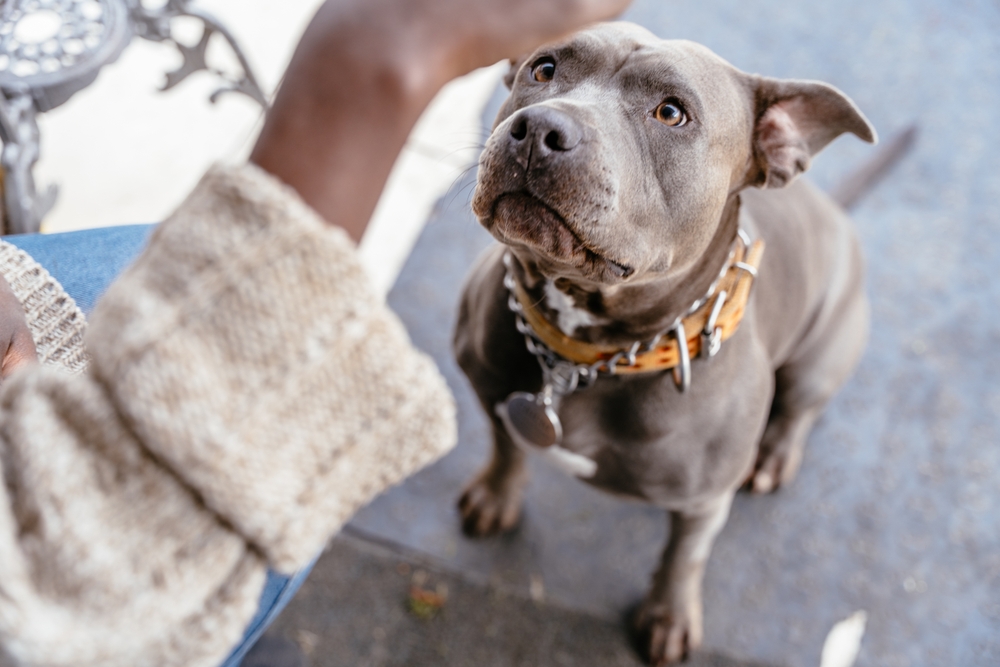
Early socialization shapes how dogs perceive resources for the rest of their lives. Puppies who experienced positive, controlled interactions around food, toys, and resting spots tend to grow into dogs with more secure attitudes about resources. Preventing guarding behaviors with a new puppy means starting good habits early: using the trade game, adding good things to their food bowls, teaching kids to respect their space, not letting other pets steal their dinner, and teaching the cue “drop it” with heavy reinforcement. Good manners take work, but they’re worth it. Working with a positive reinforcement trainer from an early age is a smart investment.
What Are the Common Myths About Resource Guarding?
A few misconceptions worth correcting:
Myth: Guarding means my dog is aggressive or has a bad temperament.
Reality: Guarding is anxiety-based, not aggression-based in the personality sense. Many guarding dogs are sweet, affectionate companions in every other context.
Myth: Guarding can’t be fixed.
Reality: Resource guarding responds well to structured training in most cases. The improvement is gradual rather than instant, but it’s real and durable.
Myth: I should take food from my dog or stick my hand in their bowl to teach them I’m in charge.
Reality: This reliably worsens guarding and can even cause it to develop in dogs who didn’t have the issue to start with. Hands near food should predict good things being added, not items being taken away. The same applies to toys: if you need to remove something they value, be prepared to offer something better in return.
Myth: My dog is just showing me that they are dominant.
Reality: Modern behavioral science has largely abandoned dominance-based explanations for most household behavior issues. Guarding is about anxiety and learned associations, not status.
Myth: I should punish my dog for guarding their food or toys.
Reality: Punishment reinforces the behavior and can cause escalation in severity. Don’t add more negativity to a situation where your dog is already feeling fear of loss. Positive reinforcement is the best long-term solution.
Creating Lasting Change
Resource guarding is treatable. With patience, the right approach, and consistent management, the vast majority of dogs learn to feel secure enough that guarding fades or disappears entirely. The process takes time, and setbacks are part of it. Knowing that the path is real and that you’re not alone in walking it makes a big difference.
Our team at Cobb & Co. is here to help you build the right plan for your dog. Reach out or schedule a behavioral consultation. The earlier we start, the easier the path forward.







Leave A Comment