
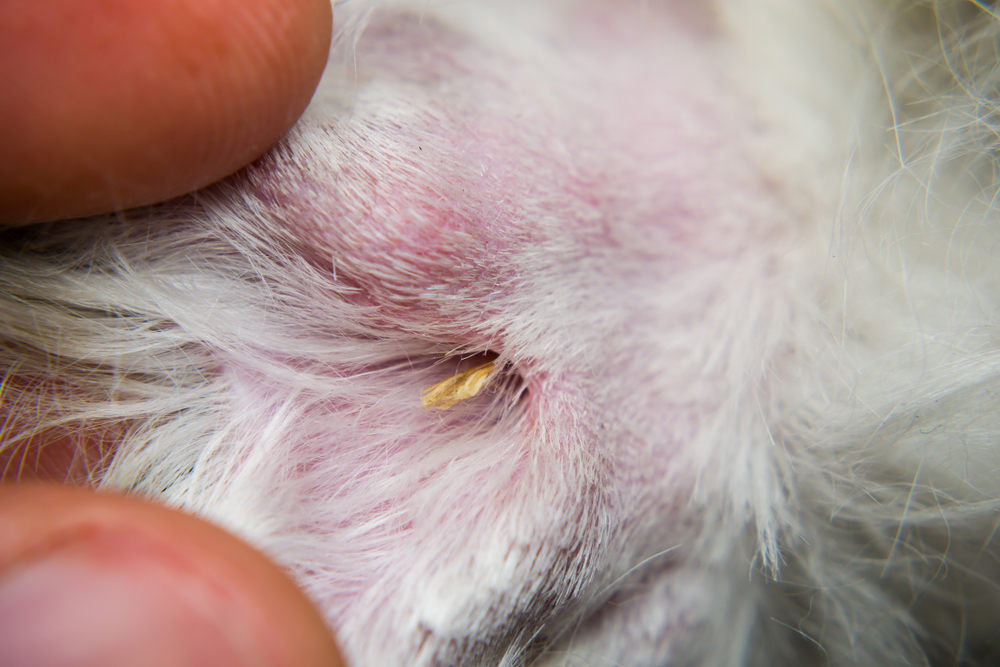
Grass seeds are dangerous to pets because of one unusual property: they only move forward. The backward-facing barbs on seed heads called grass awns or foxtails prevent them from working their way back out once lodged in skin or fur, so instead they migrate inward through tissue, sometimes traveling a significant distance from where they first entered. What starts as a seed in a paw or ear can become an abscess, a draining wound in an unexpected location, or in serious cases a foreign body deep in the chest or abdomen. The awn itself is invisible on X-rays, which means prompt attention after a walk through tall grass, before any visible sign appears, is critical to preventing major medical problems.
Cobb & Co. Veterinary Clinic in Elgin sees dogs and cats six days a week, with same-day appointments often available when you call ahead. If your pet has been in tall grass and something concerns you, call us so we can take a look before a small problem becomes a bigger one.
Grass Awn Injuries at a Glance
- Awns only move forward: these barbed seed heads, including foxtails, spear grass, and cheatgrass, do not work themselves out of tissue.
- They enter almost anywhere: between toes, in ears, in the nose, around eyes, and on skin, and from any of these they can migrate to internal organs.
- They are invisible on X-rays: diagnosis often needs ultrasound, CT, or surgical exploration.
- Same-day attention prevents most complications: an awn caught early comes out far more simply than one that has migrated.
What Are Grass Awns and How Do They Work?
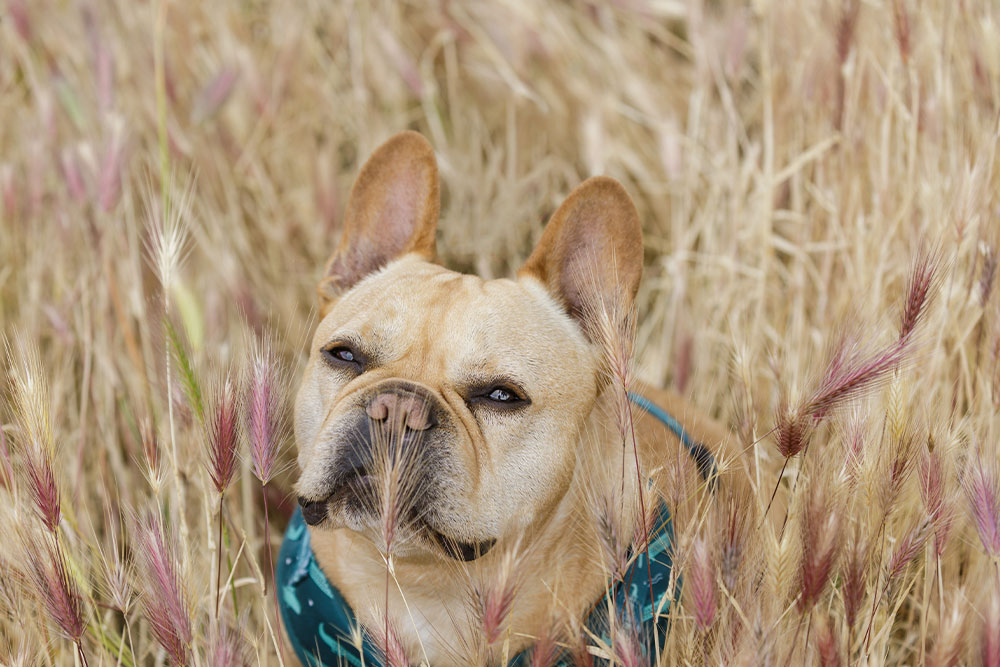
Grass awns are the spiky seed heads from several common grass species, including foxtails, cheatgrass, and ripgut brome, and locally they dry out and become dangerous in mid-to-late summer when grasses go to seed. Foxtails are the most familiar name, but the broader category includes any awn with backward-pointing barbs.
The barbs are the problem. When an awn attaches to a pet’s fur, skin, or mucous membranes, every movement drives it deeper, and the barbs prevent it from sliding back out. Over hours to days the awn migrates through tissue, sometimes traveling surprising distances: a foxtail that enters between the toes can end up traveling up the leg, an awn inhaled through the nose can reach the lungs, and an ear-canal awn can perforate the eardrum. Pets encounter awns in tall grass, fields, overgrown trails, and any unmaintained outdoor area, and long-coated breeds and pets who run hard through brush are at higher risk simply because of the contact surface.
Why Are Grass Awns More Dangerous Than They Look?
The barbed design is exactly what drives the danger, turning a tiny seed into a migrating foreign body. A few common complications:
- Abscesses and draining tracts: the awn migrates through tissue, creating a path that becomes infected and forms a chronic draining wound, often far from where it entered.
- Chronic otitis externa: when an awn enters the ear canal, persistent head shaking and foul-smelling discharge follow, and resolution requires removing the awn, not just treating the infection.
- Respiratory complications: inhaled awns cause sneezing fits and coughing, and in serious cases pneumothorax or lung abscesses as the awn migrates through the airway.
- Corneal ulcers: awns that lodge in the eye or under the third eyelid can cause vision-threatening damage quickly.
- Internal foreign bodies: migrating awns that reach the chest, abdomen, or spinal canal often require advanced imaging and surgical exploration to find and remove.
Where Do Grass Awns Hide and What Are the Signs?
Awns can lodge almost anywhere on or in a pet, and the signs depend on location. The table below maps the common entry points to what to watch for:
| Body location | Signs to watch for |
| Paws, between toes | Licking, limping, a swelling or draining spot |
| Ears | Head shaking, head tilt, odor, discharge |
| Nose | Sudden violent sneezing, bloody discharge from one nostril |
| Eyes | Squinting, redness, tearing, pawing at the face |
| Skin, armpit, groin, chest | Lumps that develop into draining sores, sometimes weeks later |
| Mouth and gums | Drooling, pawing at the face, reluctance to eat |
Many of these signs can also point to other problems like allergies, infection, or dental disease, but in a pet who has recently been in tall grass, foxtail injuries move to the top of the differential.
What Delayed Signs Should You Watch For?
Awn-related symptoms can show up hours or days after exposure rather than immediately, so the window for watching does not close when you get home. After a hike or yard play, watch for:
- Limping that develops over the next day or two
- A new head tilt or persistent head shaking
- Sneezing that starts suddenly and does not resolve
- A new lump or swelling, especially one that develops a draining hole
- Coughing without another explanation
- Persistent licking at one spot
Same-day evaluation when these signs appear prevents more invasive procedures later. An awn caught at the entry point comes out with minimal trouble, while one that has migrated for a week often requires sedation and surgical exploration to track down the awn and remove it.
How Do We Diagnose and Treat Awn Injuries?
Awns do not work themselves out, so professional removal is essential, and the approach depends on where the awn entered and how long it has been there:
- Visible or superficial awns may come out during a routine appointment with topical anesthetic or light sedation, depending on location.
- Ear canal awns require otoscopic examination, sometimes under sedation if the ear is too painful or the awn too deep to remove awake.
- Nasal awns typically require sedation and rhinoscopy, because sneezing makes any awake attempt impossible.
- Migrating awns under the skin may need ultrasound to locate, followed by surgical exploration, and multiple seeds can be present at one site.
- Deep migration into the chest or abdomen may require advanced imaging and surgical retrieval, and these cases are referred when our in-house diagnostics suggest the awn has traveled beyond what we can address.
- Eye involvement requires careful examination, often with fluorescein stain, and immediate removal to prevent corneal damage.
- Cultures, antibiotics, pain management, and recheck visits are usually part of the plan, because awn injuries are typically already infected by the time they are found.
Awn cases often require multiple visits to ensure all seeds are accounted for and healing is on track, and early treatment is consistently simpler than delayed treatment.
How Do You Prevent Grass Awn Injuries?
Prevention is far easier than treatment, and a few habits cover most of the risk:
- Choose mowed or maintained trails during peak awn season, typically late summer through fall here.
- Inspect paws, ears, eyes, gums, and groin after every outing in tall grass.
- Trim long fur between toes, around ears, and in the groin during awn season.
- Avoid letting dogs run through dry, seedy grass when possible.
- Consider Outfox hoods for dogs in heavy awn country, which protect the ears, nose, and eyes.
- Keep up regular grooming, which reduces the loose coat that catches and holds awns.
- For dogs with long paw hair, soft-sole booties during walks in grassy areas reduce risk of catching awns between the toes.
What Is a Good Post-Adventure Inspection Routine?
A two-minute check after every outdoor outing catches most awns before they migrate, and it is easiest to fold into the cuddle that follows a walk. Work through the body in order:
- Paw pads and between the toes: spread the toes gently and look in every space, where awns love to hide.
- Ear margins and the visible canal: look for awns clinging to the fur around the ear and at the canal opening.
- Eyes: a gentle pull on the lower eyelid shows whether anything is lodged underneath, and watch for tearing or squinting.
- Nose and muzzle: awns can stick in nostrils or in the muzzle fur.
- Gums and inside the mouth: a quick look around where the gums meet the teeth.
- Coat overall, especially armpits, chest, groin, and belly: run your hands through the coat and feel for anything stuck.
If your pet’s behavior changes in the days after a tall-grass outing, with sneezing, limping, persistent licking, or new lumps, come in even if your post-walk check turned up nothing.
Frequently Asked Questions About Grass Awns
Can I Remove a Grass Awn at Home?
A visible awn lightly stuck in the fur can be carefully picked out with fingers or tweezers. An awn embedded in skin, in the ear canal, under an eyelid, or in the nose needs professional removal. Trying to pull a deeply embedded awn can break it and leave fragments behind, which keeps the migration going.
What if My Dog Doesn’t Seem to Have an Awn but Was Running Through Tall Grass?
Do the inspection routine and watch closely for the next few days. If anything develops, such as sneezing, limping, lumps, or persistent licking, come in. Many awn cases first show up days after exposure, once symptoms develop from migration.
Are Awns a Year-Round Problem?
In our region, peak season is mid-summer through fall, when grasses dry out and seed heads disperse. Dry, dormant awns from previous seasons can also cause problems any time of year, so vigilance never fully stops.
Will My Pet’s Insurance Cover Awn Removal?
Most pet insurance covers foreign body removal as a covered condition, including imaging and surgery if needed. Check your specific policy for deductibles, reimbursement percentages, and any waiting period that applies.
Catch Them Early, Treat Them Simply
The unifying lesson with grass awns is that early attention prevents the more difficult cases. A seed found between the toes during your post-walk check is a quick fix, while a migrating awn that surfaces as a chest infection three weeks later is a much harder problem to solve. The inspection routine, awareness during peak season, and a low threshold for calling when something seems off are the three pieces that matter most.
If your pet has been in tall grass and something is concerning you, book a visit or call us and we will take a careful look.








Leave A Comment