
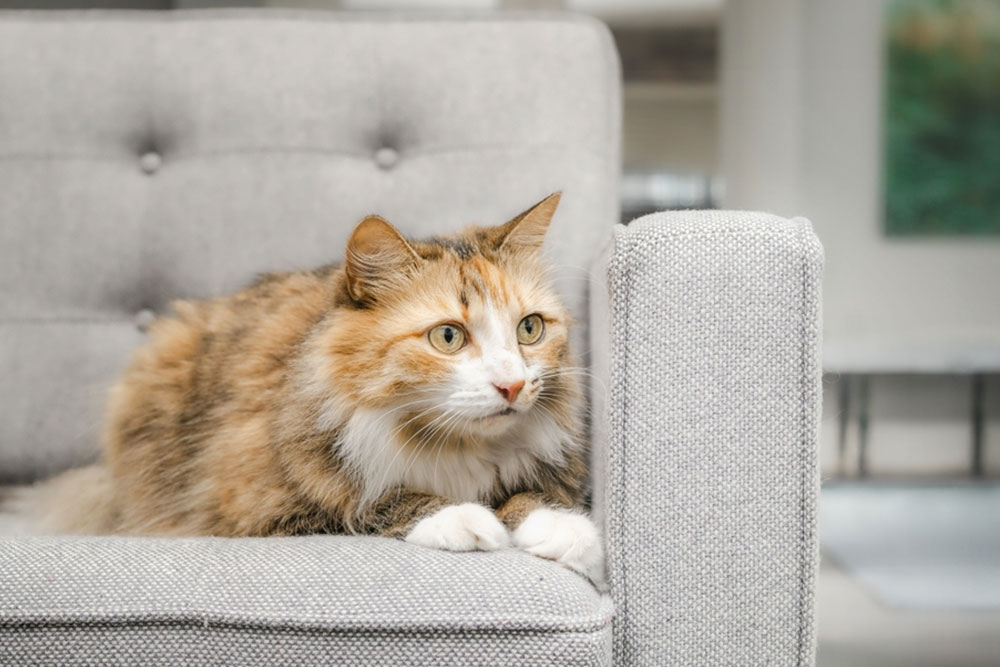
A cat who spends the day on edge rarely needs more square footage; what calms them is how the space they already have is arranged. Cats relax when their instincts are met: high perches to survey from, hiding spots where no one follows them, and food, water, and litter boxes spread out so nobody feels cornered. A studio apartment built around those needs can feel safer to a cat than a four-bedroom house without them. And the stakes are real, because a cat under constant low-grade stress tends to show it through hiding, litter box avoidance, or overgrooming.
Low-stress handling is how we practice every day at Cobb & Co. Veterinary Clinic in Elgin, where our team includes Fear Free and Cat Friendly certified professionals, so we know exactly how much environment shapes a cat’s sense of safety. Because pain and illness often masquerade as anxiety, we start with a hands-on exam and in-house bloodwork when the picture calls for it, and during a behavioral counseling visit we map out your cat’s specific triggers and help you rearrange the setup to bring your cat peace in their home. If your cat spends more time under the bed than on it, reach out and we will help you plan a calmer home together.
Start Here: The Calm-Home Basics
- A calm cat usually comes from a well-arranged home, not a bigger one, since perches, hiding spots, and spread-out resources matter far more than square footage.
- Most feline behavior complaints trace back to the litter box, so box number, size, placement, and cleanliness are the first things worth auditing.
- Vertical space and daily enrichment give indoor cats an outlet for the hunting, climbing, and scratching instincts that domestication never removed.
- Sudden shifts in mood, grooming, or litter box habits deserve a veterinary exam first, because pain and illness often look exactly like anxiety.
How Do I Read My Cat’s Mood and Body Language?
Your cat is talking to you all day long, mostly without a sound. Tail position, ear angle, eye shape, and overall posture each carry meaning, and a sudden change in any of these patterns is worth a closer look.
Start with the vocabulary of cat body language: a flattened ear, a puffed tail, a slow blink, and a loose or tucked posture each mean something different depending on what is happening around your cat. Purring is the classic example of a signal that needs that context, since a cat may purr while content and also while frightened or in pain. The best time to learn your cat’s normal is when they feel fine, which is one reason a full nose-to-tail wellness exam each year is so useful: it gives us a baseline to measure against when something shifts.
Why Do So Many Cat Problems Start at the Litter Box?
The litter box is the single most common source of feline behavior complaints, and most of those problems come down to setup rather than a “bad” cat. Too few boxes, the wrong size, an inconvenient spot, or marginal cleanliness will push even an easygoing cat to look for somewhere better to go.
How Big Should the Box Be, and How Many Do I Need?
The general rule for litter box needs is one box per cat plus one, each roughly one and a half times your cat’s body length, with open, covered, and top-entry styles trading privacy against easy entry. Covered boxes hold odor in for you but also trap it for your cat, and they can feel like a dead end if another cat lurks outside. Top-entry styles keep litter off the floor yet ask a lot of stiff, older joints, and furniture-style boxes hide the mess but often run small. The plus-one part matters most in multi-cat homes, so no single cat can guard the only option.
Where Should the Box Go, and How Clean Is Clean Enough?
Placement quietly makes or breaks the whole setup. Boxes do best in calm, low-traffic spots, spread across different rooms and floors, and kept well away from the food and water bowls, since cats dislike eliminating where they eat. Scoop at least once a day and do a full litter change on a regular schedule, because a box that is merely “good enough” slowly becomes a box your cat avoids. A cat who consistently picks one specific off-box spot is handing you a clue, not being spiteful. Stress can contribute to lower urinary tract disease in cats, and that bladder inflammation hurts. When urinating causes pain, your cat learns to associate the litter box with discomfort and may start avoiding it. A cat who suddenly abandons a clean, familiar box is communicating that something is wrong, so a same-day sick visit is the right first move before assuming the cause is purely behavioral.
Is Vertical Space Really My Cat’s Extra Square Footage?
For a cat, height is genuine territory. A perch offers safety from foot traffic, a lookout to survey the room, and a claimed spot that does not have to be shared, which is why a small home with good vertical routes can feel roomier to a cat than a big one without them.
Wall-mounted cat shelves, bridges, and climbing systems turn unused wall height into usable territory. Cat trees, a cleared bookshelf top, and a padded window perch all pull their weight too, and the best mix depends on your walls and your cat. Two practical notes: a wobbly tower gets abandoned fast, so stability is everything, and aging cats appreciate broad, low steps with a grippy surface for tired joints. Height is also the first thing to add when two cats are not getting along, because a vertical exit turns a standoff into a simple “you take the couch, I will take the shelf.”
What Enrichment Do Indoor Cats Actually Need?
Indoor cats still need to hunt, climb, scratch, and investigate every day, and indoor cat enrichment is how you give those instincts a safe outlet. A bored cat does not just get restless; that unspent energy often reroutes into overgrooming, midnight zoomies, or picking fights with a housemate.
How Do I Play With My Cat the Right Way?
Satisfying play mirrors the full hunting behavior in cats, moving through search, stalk, chase, pounce, and a final catch, because a session that ends without that catch leaves your cat wound up rather than settled. Make the toy behave like real prey: dart it away from your cat, let it hide behind a chair, then let it get caught. Laser pointers can be great exercise, but a beam offers no prey to actually catch, so end every session by letting your cat pounce on a real toy they can hold. Rotate a small set of toys so they keep feeling new, and do not overlook the free stuff, since a crumpled paper ball or an open cardboard box is often preferred over an expensive gadget.
Can Feeding Time Be Enrichment, Too?
Cats did not evolve to find a full bowl waiting; they evolved to catch many small meals across the day. You can bring some of that instinct back with food puzzles, slow feeders, treat-dispensing balls, a few scattered feeding stations, or a little hand-feeding. The wet-versus-dry decision carries both nutritional and behavioral weight, and it is worth sorting out with our team through nutritional counseling rather than guessing.
What About Scent, Catnip, and the Great Outdoors?
Scent is a rich, underused form of enrichment. Essential oil toxicity is a real hazard, since cats cannot process many of the compounds in diffusers and scented products, so keep those well away from your cat’s spaces. Catnip and silver vine, by contrast, are safe novelties that most cats enjoy. Don’t forget about scents from outside: a pinecone, a feather, a small tree branch, or a few leaves go a long way. Be sure to compare any plants against the toxic plant list first. For fresh air without the risks, think catio, a secure window perch, a bird feeder just outside the glass, or harness training. And never trust an unscreened window or balcony, because a cat will chase a bird right over the edge.
How Do I Stop My Cat From Shredding the Couch?
Scratching marks territory and conditions claws, so it cannot be trained away; redirecting destructive scratching means offering sturdy posts in several orientations, placing them where your cat already scratches, and rewarding the right surface. Make the couch less appealing at the same time with double-sided tape or a cover, and keep those nails trimmed. Soft nail caps can protect furniture from a determined shredder. Declawing is a different matter entirely: it amputates the last bone of each toe and carries real pain and behavior risks, which is why we do not perform it.
Can You Actually Train a Cat?
Cats are genuinely trainable, and positive reinforcement for cats, rewarding the behavior you want, works far better than any attempt to punish the behavior you don’t. Training doubles as first-rate mental exercise, and a few minutes with a clicker and a handful of treats can settle a restless cat as much as a good play session.
Short and upbeat beats long and repetitive, so several two-minute sessions will teach more than one marathon. A clicker, or a consistent word, marks the exact instant your cat gets it right and speeds the whole process along.
What Is Cooperative Care, and Why Bother?
Cooperative care means teaching your cat to willingly take part in nail trims, ear checks, medication, and stepping into the carrier, instead of being wrestled through them. It is one of the highest-value things you can teach, because it lowers the stress of every veterinary visit and makes handling at home genuinely safer. The training itself builds trust between you and your cat, and any training is a good enrichment activity.
How Do I Keep the Peace in a Multi-Cat Home?
Some cats genuinely enjoy a companion while others would rather be the only cat, and forcing closeness usually backfires. Addressing tension between cats starts with removing competition: more vertical space and duplicated resources like separate feeding stations, water, and boxes, so no cat has to win a standoff for a basic need.
Pheromone diffusers can also take some of the edge off during a rocky stretch, especially after a move or a new arrival, by mimicking the calming scent signals cats leave when they feel safe. So how do you know whether to grab a toy or let them sort it out? Watch for a few tells.
| Signal | Usually Play | More Likely a Fight |
| Sound | Silent, or soft chirps and trills | Hissing, growling, or yowling |
| Roles | Cats take turns chasing and being chased | One cat always chases; the other only flees |
| Claws and teeth | Sheathed claws, gentle inhibited bites | Claws out, real bites, fur flying |
| Afterward | Both settle, groom, or nap nearby | One cat hides, or stops eating and using the box |
If a scuffle tips into a genuine fight, do not punish either cat, which only adds fear to the mix. Toss a toy or make a noise to break it up, then give everyone space to reset. When tension does not settle with more room and more resources, we can work through persistent conflict together and build a slow, structured reintroduction plan.
When Is a Behavior Change Actually a Medical Problem?
A brand-new behavior problem deserves a veterinary exam before anyone calls it “just behavioral.” Litter box avoidance, inappropriate scratching, overgrooming, sudden vocalizing, aggression, and withdrawal are the common cat behavior issues households notice most, and any of them can have a medical driver hiding underneath, from pain to thyroid disease.
Life changes drive a surprising share of feline behavior shifts, too: a move, a new baby, a construction crew next door, a change in your schedule, even a strange cat prowling past the window. Before we chalk anything up to environment, though, a hands-on exam plus bloodwork and a urine test we can run in-house looks for the physical culprits, from a urinary problem to hyperthyroidism to arthritis pain. Because we build the whole visit around low-stress handling, we can often untangle the medical piece and the environmental piece in a single appointment.
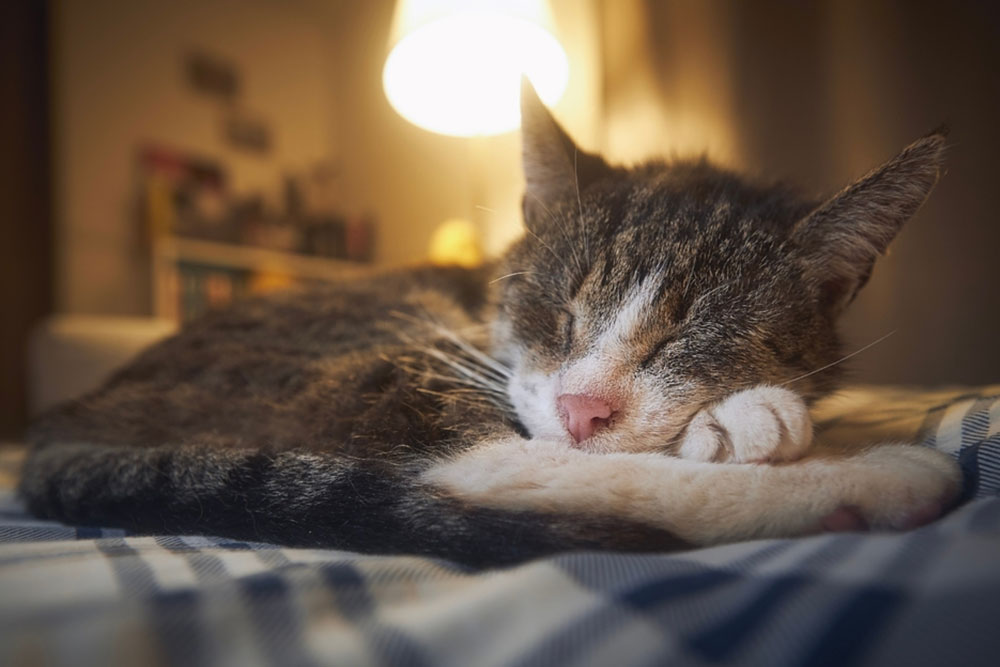
How Should I Adjust the Home for a Senior Cat?
Older cats change in ways that can look like stubbornness but usually are not. New nighttime yowling, missed litter box trips, and disorientation are common behavior changes in older cats, often driven by cognitive decline, arthritis, or fading senses rather than a change of heart.
A few targeted tweaks make an aging cat’s world easier to navigate:
- Lower the barriers: A box with a low or cut-down entry spares sore hips, and an extra box near favorite napping spots shortens the trip.
- Bridge the heights: Steps or a ramp keep a favorite windowsill or bed within reach once jumping gets hard.
- Add comfort and calm: Soft or heated bedding soothes stiff joints, a night light helps failing eyes, and a pheromone diffuser can steady a cat who has grown more anxious with age.
Frequently Asked Questions About Cat Home Setup and Enrichment
Will getting a second cat cure my cat’s loneliness?
Not necessarily. Some cats are genuinely happier as an only cat, and adding a second can create the very stress you were hoping to relieve. If your cat seems bored rather than lonely, more play, vertical space, and daily enrichment often solve it without another litter box to clean. When you do decide you want a companion, a slow, scent-first introduction gives the new pairing its best odds of settling into a comfortable truce.
My cat has plenty of toys but ignores them. What am I doing wrong?
Cats habituate fast, so a toy that has sat out for weeks stops reading as prey. Rotate toys in and out of a closet so they feel new again, and remember that most toys still need you. A wand dragged like a fleeing mouse beats a pile of catnip mice on the floor every time. Novelty and prey-like movement are what actually switch on the hunt, so a few minutes of active play usually accomplishes more than a basket of neglected toys.
Is it too late to change the setup for an anxious older cat?
It is rarely too late. Even senior cats respond well to a calmer, more predictable environment, though the changes land best when you introduce them gradually rather than rearranging everything at once. If the anxiety is new or clearly getting worse, a checkup comes first, since discomfort and cognitive change are common, treatable causes in older cats. Once we have ruled those out, small environmental adjustments can make a real difference in how settled an older cat feels.
A Calmer Home Is Usually the Same Home, Arranged Better
A cat-friendly home is rarely a bigger home. It is the same rooms with a few intentional choices: a perch by the window, a second litter box down the hall, and a few secure sleeping spots. If your cat spends more time hiding than lounging, or you are getting ready for a new arrival, request an appointment with Cobb & Co. Veterinary Clinic in Elgin and we will help you map out a calmer setup that fits both your home and your cat.









Leave A Comment