
When Baby Teeth Don’t Fall Out: Dental Risks and Treatment Options
Why Is There an Extra Tooth in My Pet’s Mouth?
If you have ever peeked inside your puppy’s or kitten’s mouth and noticed what looks like a double row of teeth, you are not imagining things. Sometimes baby teeth (also called deciduous teeth) do not fall out on their own when the adult teeth come in, and the result is two teeth crammed into a space designed for one. It looks a little funny, but it is more than a cosmetic quirk. Those lingering baby teeth can trap food and bacteria, crowd adult teeth out of alignment, and set the stage for painful dental problems down the road.
The good news is that retained deciduous teeth are common, well understood, and very treatable when caught early. At Cobb & Co. Veterinary Clinic, we check for these issues at every puppy and kitten visit because timing makes all the difference. If you have noticed an extra tooth or your young pet’s mouth looks a little crowded, book now for a dental checkup so we can take a look and make a plan.
When Do Puppies and Kittens Normally Lose Their Baby Teeth?
Just like human kids, puppies and kittens go through a teething phase where small, sharp baby teeth are gradually replaced by larger permanent ones. A little extra drooling, some enthusiastic chewing, and the occasional baby tooth found on the living room floor are all perfectly normal during this stage.
Here is the general timeline:
- Puppies typically have their adult incisors by around 4 to 5 months and their adult canines and premolars by roughly 5 to 7 months
- Kittens tend to develop adult incisors by 3 to 4 months and adult canines and premolars by about 4 to 6 months
By around 6 to 7 months of age, most pets should have a full set of adult teeth with no baby teeth remaining. Good pet dental care starts early, and that includes checking that baby teeth are leaving on schedule. Our wellness and preventative care visits include gentle dental evaluations at every stage of your pet’s growth.
What Are Retained Baby Teeth, and Why Do They Happen?
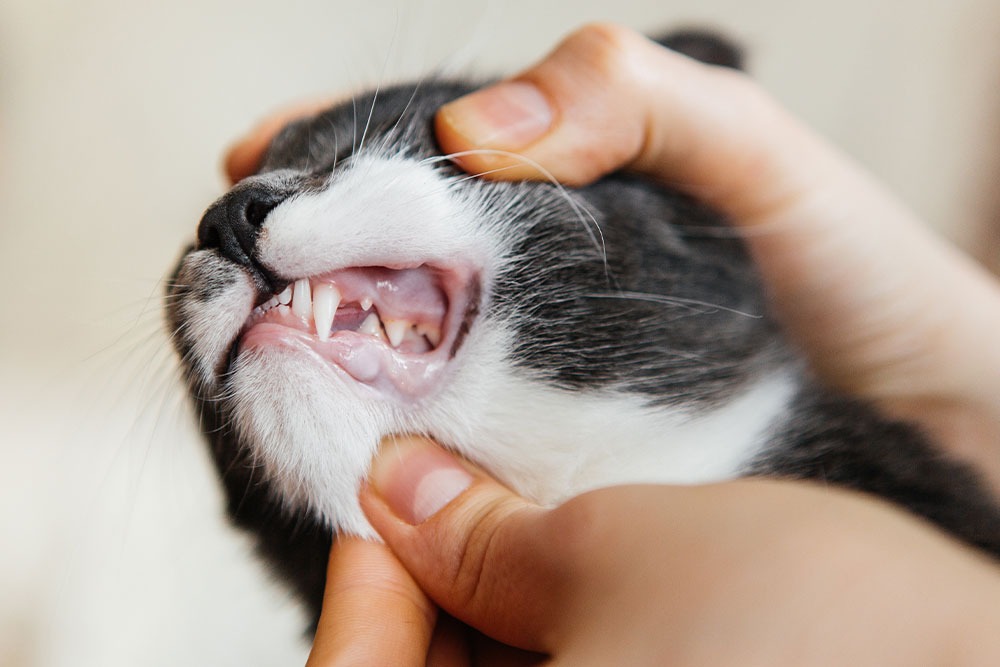
A retained deciduous tooth is simply a baby tooth that stays put after the adult tooth has already erupted next to it. The classic sign is a slim, sharp baby canine sitting right beside a thicker adult canine, creating that unmistakable “double fang” appearance. You might also see it with incisors or premolars, though canines are the most common culprits.
Why does it happen? In many cases, the baby tooth’s root does not resorb (break down) the way it should, so the tooth stays anchored even as the adult tooth pushes through. Genetics and breed tendencies play a role, as do crowded jaws and abnormal tooth positioning. It is especially common in toy and small breed dogs, but any puppy or kitten can be affected.
The important thing to know is that there is a window to act. Timely deciduous canine tooth removal protects your pet’s bite and gives adult teeth the best chance to settle into their correct positions. Small breeds already face a higher risk of dental disease, so catching retained teeth early is especially important for them. Our dentistry services include exams and planning for safe, well-timed extraction.

What Problems Can Retained Baby Teeth Cause?
This is where a quirky-looking double tooth turns into a real health concern. When two teeth are jammed into a space meant for one, problems develop quickly.
Plaque and tartar buildup: The tight gap between a baby tooth and an adult tooth is a perfect trap for food and bacteria. Plaque accumulates fast in spaces that are nearly impossible to clean, leading to tartar, gum inflammation, and bad breath, sometimes in pets that are only a few months old.
Early periodontal disease: That bacterial buildup does not just sit on the surface. It works its way below the gumline, causing infection, bone loss, and gum recession around teeth that should be healthy for years to come. Identifying problems early in puppy or kitten mouths can prevent these issues from taking hold.
Misaligned bite: A retained tooth can physically block an adult tooth from moving into its correct position. Over time, this creates an abnormal bite that leads to uneven wear, difficulty chewing, and contact between teeth that should not be touching.
Enamel damage: Constant contact between crowded teeth can scuff or wear down adult enamel, weakening teeth that your pet needs to last a lifetime.
The longer a retained tooth stays, the more damage it can do. Our dental packages include full-mouth x-rays, deep cleaning, and treatment options to protect your pet’s long-term oral health.
When Should Retained Baby Teeth Be Removed?
Once the adult tooth has fully erupted and the baby tooth is still in place, the baby tooth should come out. Waiting around to see if it falls out on its own is risky because retained teeth that are already sitting next to adult teeth rarely resolve without intervention. Every week of delay gives crowding and bacteria more time to cause damage.
We often coordinate extraction with other scheduled procedures to minimize anesthesia events. If your pet is being spayed or neutered around the same age, that can be a convenient time to address retained teeth in the same visit. If the timing does not line up or the situation is more urgent, we plan a dedicated dental visit. Whether through surgery or dentistry, our approach always puts safety and comfort first.
Can Retained Teeth Lead to Chips, Cracks, or Fractures?
Yes, and this is one of the risks that tends to catch owners off guard. Crowding changes how teeth meet during chewing and play, and that creates abnormal forces that can chip or crack teeth. Even a small chip matters because it can expose the sensitive inner layers of the tooth, leading to pain, sensitivity, and infection.
The risks of fractured teeth go beyond cosmetic damage, and even a minor chipped tooth can worsen quickly if bacteria find their way inside. If the pulp (the living tissue inside the tooth) becomes exposed, abscesses and infections can follow. We manage fractured teeth in pets with pain control, imaging, and appropriate treatment, but correcting crowding early is always better than dealing with the consequences later. If your pet has a chipped or painful tooth, our dentistry services will assess the situation and we will walk you through your options.
What About Infections and Abscesses?
The tight pockets around retained teeth are ideal breeding grounds for bacteria, and in some cases, infection develops at the tooth root. A tooth root abscess is painful and can make your pet feel genuinely sick if left untreated.
Signs to watch for:
- Persistent bad breath or drooling that goes beyond normal teething
- Facial swelling or tenderness along the jaw
- Pawing at the mouth or reluctance to chew hard food or toys
- Reduced appetite or chewing on only one side
Young pets can be subtle about dental pain, so these signs are easy to miss without regular checks. If you suspect a tooth abscess, prompt care is important. We use dental x-rays to detect hidden infections and treat both the pain and the underlying cause. For urgent concerns, please contact our team so we can get your pet seen quickly.
What Does the Extraction Process Look Like?
If your pet needs a retained baby tooth removed, the procedure is straightforward and typically very well tolerated by young animals. The goal is to remove the entire tooth and its root cleanly, because leaving root fragments behind can cause ongoing problems.
Here is what to expect:
- A pre-anesthetic exam and a plan tailored to your pet’s age and health
- IV support and continuous monitoring throughout anesthesia
- Full-mouth x-rays to evaluate roots, bone, and the position of adult teeth
- Complete extraction of the retained tooth with careful attention to the surrounding structures
- Post-operative pain control and clear home care instructions
Most young pets bounce back quickly. They are often eating comfortably the same day and back to their usual antics within a day or two.
Which Breeds Need Extra Attention?
Toy and small breed dogs are significantly more likely to retain deciduous teeth. If you have a Pomeranian, Chihuahua, Yorkshire Terrier, Shih Tzu, or Maltese, plan on checking their mouth closely during the 4 to 7 month window when adult teeth are coming in. Some cats with smaller jaws or certain facial structures, like flat faced breeds, can also be affected.
For at-risk breeds, we plan scheduled mouth evaluations with clear timelines so nothing gets missed. If your pet is predisposed or you have noticed crowding, our dentistry services include full-mouth x-rays and individualized care plans.
How Do You Keep Your Pet’s Mouth Healthy After Extraction?
Once the retained tooth is out and the adult teeth have room to settle, good habits keep everything on track. Avoid inappropriate chew items like antlers, real bones, and hard nylon toys that can crack teeth. Look for products carrying the VOHC seal, which means they have evidence behind their plaque or tartar control claims.
Brushing your pet’s teeth with pet-safe toothpaste is the gold standard for home care, and starting while your pet is young makes it much easier to build the habit. Keep sessions short, pair them with praise or treats, and aim for a few times per week at minimum. Dental chews, wipes, gels, and water additives can also make a significant difference when used regularly. Our online pharmacy has a wide range of dog dental products and cat dental products to help make great oral care easy.
If you notice changes in breath, chewing patterns, or gum color at any point, let us know so we can check in. For ongoing support, book a wellness and preventative care visit and ask about the best timing for professional cleanings based on your pet’s individual risk.
Setting Your Pet Up for a Lifetime of Healthy Teeth
Retained baby teeth are one of those problems that looks small but can snowball quickly if it is not addressed. The good news is that early detection and timely extraction prevent nearly all of the complications we have discussed, from crowding and misalignment to infection and tooth fractures. A quick procedure now saves your pet from much bigger dental problems later.
If you have spotted a double tooth, have questions about your pet’s mouth, or just want to make sure everything is developing the way it should, our team is ready to help. Book now or contact us to schedule a visit. We are here to guide you through every stage of your pet’s dental health so they stay comfortable and smiling for years to come.
Frequently Asked Questions
How do I know if my pet has a retained baby tooth? Look for the “double fang” appearance, where a slim, sharp baby tooth sits right next to a thicker adult tooth, usually at the canines. If you see two teeth where there should be one, it is time for a dental check.
Will a retained baby tooth fall out on its own? Once the adult tooth has fully come in beside it, a retained baby tooth rarely falls out without help. Waiting increases the risk of crowding, infection, and damage to the adult tooth.
Is extraction safe for young pets? Yes. Young, healthy pets tolerate anesthesia very well, and the procedure is quick. Most puppies and kittens are back to normal within a day or two.
Can retained teeth be removed during a spay or neuter? Often, yes. Coordinating the procedures minimizes the number of anesthesia events, which is why we check for retained teeth during pre-surgical exams.
At what age should I start checking my pet’s mouth? Start peeking at their teeth around 4 months of age, when adult teeth begin coming in. The key window for catching retained teeth is between 5 and 7 months.





Leave A Comment