
Practical Solutions to Stop Destructive Chewing
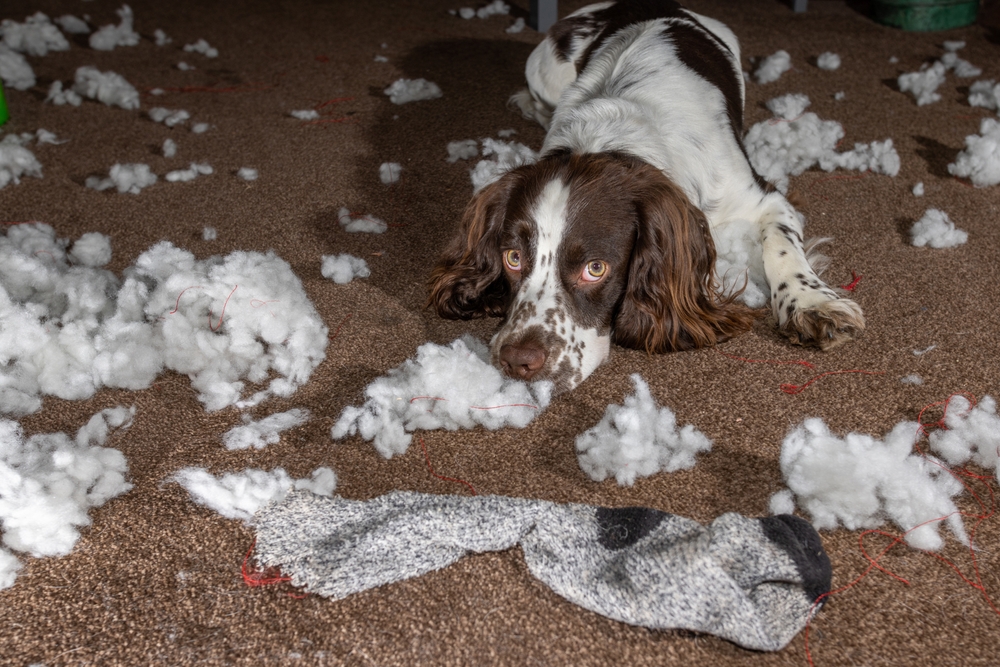
A dog who chews through a couch cushion while left alone for two hours is not making a statement about interior design preferences. Destructive chewing is almost always communicating something: boredom, anxiety, excess energy with nowhere to go, or a lack of appropriate outlets that make the couch the next best option. The approach that works depends almost entirely on which of those things is actually driving the behavior, which is why “just buy more toys” rarely solves the problem.
Cobb and Co. Veterinary Clinic in Elgin, IL takes behavioral health as seriously as physical health, and our behavioral counseling services are available to help owners work through the specific patterns behind a dog’s destructive behavior. Contact the clinic to discuss what a dog’s chewing behavior might be communicating and how to redirect it constructively.
Is Your Dog Chewing Everything? Here’s Why It Happens
Chewing is deeply wired into dogs. It serves real functions: exploring new environments, relieving teething discomfort in puppies, maintaining jaw strength, and self-soothing during stress. The problem is when that natural drive gets aimed at baseboards, remote controls, or anything leather. Common dog behavior issues like destructive chewing tend to escalate when there’s an unmet need being expressed through whatever happens to be within reach. Behavior with a cause can be changed once that cause is identified.
Normal Chewing vs. Destructive Chewing: What’s the Difference?
Appropriate chewing looks like a dog working calmly through a chew toy on their own schedule. Destructive chewing is what happens when that impulse goes sideways: furniture legs gnawed down, shoes demolished in under five minutes, or door frames chewed around the edges while an owner is away.
Age plays a real role here. Puppies go through active teething between about 3 and 6 months, when the need to chew is at its most intense. Managing mouthing during the puppy stage requires consistent redirection rather than correction, since the drive to chew is genuine and healthy at that age. Adult dogs who develop new chewing behavior warrant a closer look at what’s changed in their environment, health, or routine. Wellness visits at Cobb and Co. include behavioral discussions at every stage of life, so this kind of guidance is part of the regular conversation.
Could Pain or a Medical Issue Be Behind the Chewing?
Before diving into behavioral explanations, it’s worth asking whether something physical is driving the behavior. Dogs experiencing dental discomfort sometimes chew compulsively as a response to oral pain, and pain signs in pets aren’t always obvious from the outside. Fractured teeth are a surprisingly common issue in dogs, especially those who have chewed hard objects in the past, and can be painful without any visible sign from a distance. Adult dogs who suddenly start chewing destructively deserve a physical exam before anyone assumes it’s purely behavioral. Cobb and Co.’s comprehensive dental care includes full-mouth X-rays to identify problems below the gum line.
What’s the Emotional Trigger? Anxiety, Boredom, and Stress
When medical causes have been ruled out, the next step is understanding the emotional state behind the chewing.
Separation anxiety is one of the most frequent culprits. Separation anxiety in pets is a genuine anxiety disorder, not stubbornness or spite. Dogs with this condition may chew specifically near doors and windows, show distress behaviors like pacing or vocalization, or destroy items with the owner’s scent.
Boredom and under-stimulation produce a different pattern. These dogs often chew when left alone but are otherwise relaxed, working through a variety of objects simply because chewing fills time and provides sensory feedback.
Noise phobias and general anxiety can also trigger destructive behavior. Noise aversion in pets is more common than many owners realize, and chewing can spike during thunderstorms, fireworks, or neighborhood construction.
For dogs whose chewing is rooted in anxiety, anxiety and calming supplements can be a helpful part of the management plan alongside behavioral work. The behavioral counseling team at Cobb and Co. can help map out the pattern and build a plan that addresses the underlying emotional state rather than just the furniture damage.
Exercise First: A Tired Dog Is a Better-Behaved Dog
One of the most straightforward and underutilized solutions for destructive chewing is simply making sure a dog is getting enough physical exercise. A dog who has genuinely spent their energy is dramatically less likely to redecorate the living room.
Exercise needs vary widely by breed, age, and temperament. Most adult dogs benefit from at least 30 to 60 minutes of aerobic activity daily, meaning activity that actually gets the heart rate up rather than a slow neighborhood stroll. Some practical options:
- Fetch, tug, and interactive games burn energy quickly and efficiently
- Off-leash time in a securely fenced area allows dogs to move at their own speed
- Structured play with other dogs provides both physical exertion and social engagement
For many dogs with boredom-driven chewing, adequate daily exercise alone produces a noticeable improvement. For dogs with anxiety-driven chewing, it helps reduce baseline arousal and makes other interventions more effective.
Mental Enrichment: Tiring the Brain Before It Starts Trouble
Physical exercise addresses the body, but mental stimulation targets cognitive restlessness that can be just as responsible for destructive chewing. Mental stimulation can be remarkably effective at reducing problem behaviors, sometimes more so than adding more physical activity.
Easy ways to add mental enrichment to your dog’s day:
- Food-dispensing toys like the Food Cube replace a regular meal with a problem-solving session, turning a two-minute bowl of kibble into ten or fifteen minutes of focused engagement
- Slow feeder bowls slow down mealtime in a way that requires attention and reduces the post-meal restlessness that sometimes precedes destructive behavior
- Puzzle toys and snuffle mats engage scent and problem-solving instincts simultaneously and can be used with meals or treats throughout the day
- Short training sessions throughout the day, even five minutes of basic practice, use mental focus productively
- Rotating toys keeps novelty alive; putting some away and bringing them back out after a week makes them feel new again
A good overview of enrichment for dogs covers how different types of enrichment target different needs.
What Should Dogs Chew? Choosing Safe and Satisfying Items
Giving a dog appropriate chewing outlets is part of the solution. Good starting points include:
- Rubber chew toys designed for tough chewers. KONG toys can be stuffed with soft food, peanut butter, or kibble and frozen, which extends the chewing session.
- Dental chews approved by the VOHC (Veterinary Oral Health Council) have been independently tested to reduce plaque and tartar and provide a safe, purposeful chewing option.
- Rope toys and soft chews can work well for gentler chewers but should be monitored to ensure pieces aren’t being swallowed.
Understanding which safe chew toy types work best comes down to knowing your dog’s chewing style. We carry dental chews and treats that are vet-approved and matched to different chewing styles in our pharmacy.
What NOT to Give: Chews That Can Cause Serious Harm
The general guideline: if an item doesn’t flex or bend under pressure, it’s probably too hard for a dog’s teeth. Items dogs shouldn’t chew include antlers, bones, hooves, and hard nylon bones, which are dense enough to fracture teeth. Real bones, especially cooked ones, can splinter and cause GI lacerations or obstructions. Sticks and rocks are common backyard offenders, and rawhide poses a choking risk when large softened pieces are swallowed.
The dangers of popular dog chews are genuinely underappreciated. If you’re unsure whether something is safe for your dog, ask before introducing it. Dental care decisions are always worth a quick conversation with the team.
Bitter Deterrent Sprays: A Simple Management Tool
For dogs who return to the same off-limits items despite redirection, a non-toxic bitter-tasting spray can help break the habit. These sprays make surfaces unappealing without harming the dog, and they work best on specific targets like chair legs, baseboards, or cords.
A few things to keep in mind: bitter sprays are a management aid, not a fix. They work best alongside training and enrichment, not as a standalone solution. Some dogs are simply unbothered by bitter flavors, so results vary. Test any spray on an inconspicuous spot before applying to furniture, and reapply regularly since the deterrent effect fades over time.
Management Strategies to Stop Chewing Before It Starts
Setting up the environment to prevent destructive chewing is just as important as training.
- Limit access to temptation. Baby gates, closed doors, and crates used positively can prevent unsupervised access to problem areas. This is management while training is in progress, not punishment.
- Supervise closely during the retraining period. If the dog isn’t in sight, they should be in a confined space with access only to appropriate items.
- Interrupt and redirect, don’t punish. A calm “uh oh” and immediate swap to an appropriate item works much better than scolding. Dogs understand consistent redirection and being told what to do rather than what not to do.
- Be consistent. Allowing chewing on old shoes sends a confusing message when the same behavior is corrected with a new shoe. Dogs can’t always tell the difference.
Basket Muzzle Training: A Safety Tool for Dogs Who Eat Everything
For dogs who don’t just chew but actively swallow things they shouldn’t, a basket muzzle can be a genuinely useful management tool. Dogs who ingest socks, rocks, mulch, or household items are at real risk for intestinal obstruction, which can be life-threatening and often requires emergency surgery.
Unlike fabric sleeve muzzles, a basket muzzle allows a dog to pant, drink, take treats, and breathe normally. When introduced gradually with positive reinforcement, most dogs become comfortable wearing one without distress:
- Start by letting the dog investigate the muzzle with treats placed inside and around it
- Progress to the dog voluntarily putting their nose in to reach treats, without fastening
- Practice clasping it briefly and immediately rewarding
- Gradually extend the duration while keeping the experience positive throughout
A basket muzzle worn during high-risk situations, such as yard time for dogs who eat mulch or walks where scavenging is a known problem, can prevent a serious medical situation without restricting quality of life. It works best as part of a broader management and training plan.
Teaching What You Want: Positive Reinforcement and Training
The most effective approach teaches dogs which items they are supposed to chew, making those items genuinely more rewarding than the couch. Positive reinforcement training builds the habits that stick.
- Reward every correct choice. When a dog picks up their chew toy and works on it, that’s the moment for praise or a small treat.
- Teach “leave it” and “drop it.” These two commands are foundational for managing chewing and worth practicing daily.
- Make approved items more exciting. Stuffing a toy with something high-value or doing a brief play session with an approved toy before leaving the house increases its appeal.
- Avoid negative reinforcement- no squirting your dog with a spray bottle, spanking or scolding, or crating as punishment. These tactics teach your dog that you are scary and erodes their trust in you, resulting in bigger behavior problems.
If a dog needs more structured training support, the Cobb and Co. team is happy to discuss referrals to professional trainers. Book a visit and let’s talk through what level of support makes the most sense.
When Does Destructive Chewing Require Professional Help?
Some situations call for more than management tips and a new toy rotation:
- Chewing that continues despite consistent management and training efforts
- Self-directed chewing: dogs licking or chewing at their own paws, tail, or flanks obsessively
- Clear signs of severe anxiety, including vomiting, house soiling, or frantic behavior alongside the chewing
- Chewing that seems rhythmic or compulsive rather than purposeful
These patterns suggest anxiety or another underlying issue is the primary driver, and that behavioral modification, sometimes combined with anti-anxiety medication, is the most effective path. The behavioral counseling team at Cobb and Co. assesses the full picture before making recommendations and refers to behavioral specialists when the complexity warrants it.

Setting Your Dog Up for Success
Destructive chewing is fixable. Dogs who are chewing destructively are not lost causes; they’re dogs with unmet needs and no better outlet, which is a solvable problem. The path forward usually involves some combination of ruling out medical causes, meeting exercise needs, addressing underlying anxiety or boredom, providing appropriate chewing options, and managing the environment consistently during retraining.
The team at Cobb and Co. Veterinary Clinic is here to help you understand your dog more deeply and build a plan that fits your life together. Book an appointment online or call us at (847) 741-6770 to schedule a behavioral consultation or wellness visit.
FAQ: Destructive Chewing in Dogs
Why does my dog only chew things when I’m not home?
This pattern is often associated with separation anxiety or boredom during alone time. Either way, the behavior is triggered by your absence, not defiance. Addressing the emotional state behind it is the most effective approach.
My puppy chews everything. Is this normal?
Yes, during teething (roughly 3-6 months), chewing is at its most intense. The goal during this phase is consistent redirection to appropriate items rather than punishment. Puppies given good outlets early carry those habits into adulthood.
My dog only chews my things, not my partner’s. What does that mean?
Dogs often target items that carry the most familiar or comforting scent. This is especially common in separation anxiety cases. It’s not a personal grudge; it’s a comfort-seeking behavior.
When should I see a vet about my dog’s chewing?
If the chewing started suddenly in an adult dog with no prior history, if your dog is chewing on their own body, if the behavior is escalating despite management efforts, or if you notice other signs of anxiety or illness alongside the chewing, a veterinary visit is the right first step. Contact us and we’ll help you sort out what’s going on.





Leave A Comment